
 Lowest Price Promise
 0% Buy now, pay later

Have you ever noticed that you struggle to fall or stay asleep during the night of a full moon? This is surprisingly common and has been named ‘lunar insomnia’ by those who suffer from it.
This Wednesday, we’ll see the rise and fall of another full moon – the Hunter’s Moon. So, to help those who expect a troubled slumber, MattressNextDay has enlisted the expertise of astrologer Inbaal Honigman, to explain what you can expect on the night of a full moon.
As sleep experts, here are their top tips for getting a good night’s sleep.
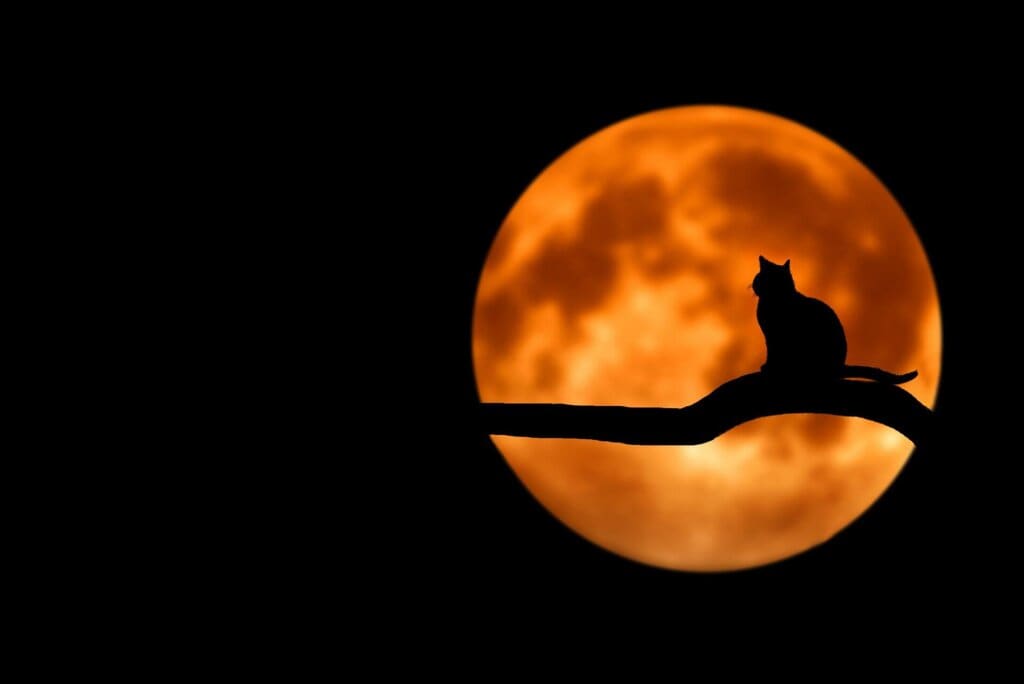
Three ways the Full Moon can impact your sleep
From controlling the tides to impacting the behavioural patterns of animals, the moon has a much deeper link to planet earth than you may think. However, have you ever wondered what science is out there to prove its link to sleep? Read on to discover…
1. It can take you five minutes longer to fall asleep
According to Inbaal, “The moon controls the tides, pulling water towards the shore and releasing it back again. The average body is made up of 70% water. If the moon can move whole oceans, imagine the effect it has on our bodies when trying to relax.”
This has also been confirmed by scientists in Switzerland. Their sleep study analysis found that on the night of a full moon, it takes the average person an extra five minutes to fall asleep.
2. You can lose 20 minutes of sleep
The same sleep study analysis found that the average person sleeps for 20 minutes less on the night of a full moon. In addition, on the days leading up to the full moon, both men and women had lower evening levels of the essential sleep hormone, melatonin. This is a central part of the body’s sleep-wake cycle as it helps your body synchronise with both night and day.
3. It can decrease your deep sleep by 30%
If, when you wake up the morning after a full moon and feel more groggy than energized – don’t be so surprised. According to a four-year study of 33 participants, researchers found during the time of the full moon, brain activity related to deep sleep dropped by 30%. All of the participants were healthy, good sleepers, and did not take any drugs or medication that would impact the results.
Four ways to prevent a bad night sleep caused by a Full Moon
Whatever the correlation between the moon and your sleep pattern, getting a bad night’s sleep mid-week is less than ideal. However, there are ways in which you can minimise the impact.
1. Minimise your use of light in the lead up to your bedtime
As history suggests, it was the light of the full moon that kept people awake. So it makes sense to minimise your use of light in the lead-up to bed. Especially as it’s the main factor that impacts your body’s internal body clock. Otherwise known as your circadian rhythm, this signals when to be alert and when to rest.
That’s why it’s important to expose yourself to the natural sunlight on the day of the full moon. Then as the late afternoon starts drawing in, you should start dimming your lights. So that by the time you get to bed, your bedroom is virtually black.
2. Stay off your phone a minimum of three hours before bed
You should also limit your use of your phone in the lead-up to bedtime. The blue light emitted on your phone screen can trick your mind into thinking that it's daytime despite it being dark outside. You should, therefore, always use the night mode feature on your phone. This should be for at least three hours before you go to bed. Or ideally, avoid your phone altogether.
3. Plan a relaxing night
If you go to bed expecting a bad night’s sleep due to the full moon, this thinking can cause you to have a restless sleep due to the placebo effect. Plus, it’ll result in your body producing more of the stress hormone, cortisol. The higher the cortisol, the more awake you feel. To help combat this, you should try to incorporate something relaxing into your afternoon routine. This could include anything from yoga to stretching, meditating to deep breathing, journaling or even having a hot bath.
4. Play rain sounds at night
As rain is predictable, calming, stable and non-threatening, steady rainfall noises have been proven to help lure the brain into falling asleep. This is because it helps induce a more meditative state that brings on relaxation.
For those still struggling to sleep, read more on the best perfume scents to help you fall asleep faster. Or, check out our range of cosy and comfortable mattresses to help you get to the land of nod.