100 Night Sleep Trial
 0% Buy now, pay later

With the cost of living still seemingly on the rise, ever-growing concerns around the impact of climate change, and countless digital screens vying for our attention at any one time, it’s safe to say that there are probably countless things big and small that might be keeping you awake at night – after all, it’s a busy world out there.
Naturally, there’s nothing strange about having a bad night’s sleep every so often; it happens to all of us. But, with that being said, ever since the pandemic way back in 2020, sleep statistics have started to suggest a steady rise in the number of recorded sleep disorders across the UK, especially when it comes to stress and its impact on sleep quality.
And, if we’re being honest, there’s almost certainly some truth to this. In fact, our own studies into sleep, stress, and anxiety indicate that upwards of 74% of people are getting less than the NHS-recommended number of hours of sleep per night – but why is this?
To find out, the team here at MattressNextDay decided to perform another sleep survey, this time with the intention of uncovering whether or not sleep disorders are truly on the rise in the UK. Not only that, but we also spoke to Dr Deborah Lee, from Dr Fox Online Pharmacy, to get her take on whether or not UK sleep disorders are becoming more commonplace..
Read on to find out exactly what we uncovered.
What is a sleep disorder?
A sleep disorder refers to any condition where a person either feels tired but is still unable to sleep or finds themselves falling asleep outside the normal routine of their circadian rhythm.
Typically, such disorders involve problems relating to the quality, timing, and amount of sleep a person receives, but they can also cover more unusual symptoms, such as sleepwalking and night terrors.
Regardless, sleep disorders like these are not necessarily commonplace, but consistent lethargy and poor sleep could be a sign that you’re experiencing one or more sleep disorder symptoms.
What are the most common types of sleep disorders?
Unlike more traditional health issues, sleep disorder symptoms can be quite tricky to monitor and diagnose, partially because the symptoms of each can vary widely from person to person.
However, in a large number of cases, the most common types of sleep disorders tend to fall under one of the following categories:
Circadian Rhythm Disorders
For 99.9% of us, nighttime is when we get the majority of our sleep, and that's not just thanks to the routine of the 9-5 workday. Instead, it's down to our natural sleep and alertness rhythms dictated by our "internal clock".
Unfortunately, said internal body clock can be easily disrupted, with things like jet lag, late/early work shifts, and delayed/advanced sleep phase syndrome (which is where you fall asleep and wake up late/early), all being possible causes for a desynchronised circadian rhythm.
Insomnia
Perhaps the most well-known form of sleep disorder, people with insomnia may feel as though they don't get enough sleep at night, and often feel sleep-deprived on a regular basis.
Sufferers of this condition will often find themselves waking up in the middle of the night, having trouble falling asleep to begin with, and waking up earlier in the morning than they’d like, while also being unable to fall back asleep despite still being tired.
For many people living with long-term insomnia, the effect can be crippling. As Dr Lee notes:
“Insomnia is a serious diagnosis that should not be overlooked. Data shows a clear link between insomnia and other serious illnesses, including cardiovascular disease, depression, dementia, diabetes, and substance use. In addition, it results in lower productivity at work, absenteeism, an increased risk of accidents, including road traffic accidents, and a reduced quality of life overall.”
Hypersomnia
The opposite of insomnia, hypersomnia refers to when a person is sleeping too much, leading to trouble staying awake consistently throughout the day, no matter how much sleep they get.
On its own, hypersomnia might not seem to be too impactful for those living with it. However, when your body is falling asleep at crucial points in the day, such as at work, on public transport, or behind the wheel, it can quickly become a serious problem.
Sleep Apnoea
A physical form of sleep disorder, those with sleep apnoea experience pauses in their breathing while they sleep, which regularly causes them to wake up due to a lack of oxygen caused by blocked airways.
As you might expect, severe sleep apnoea can cause people to wake up multiple times in the night, leading to long-term tiredness if the underlying cause of the disorder is left untreated.
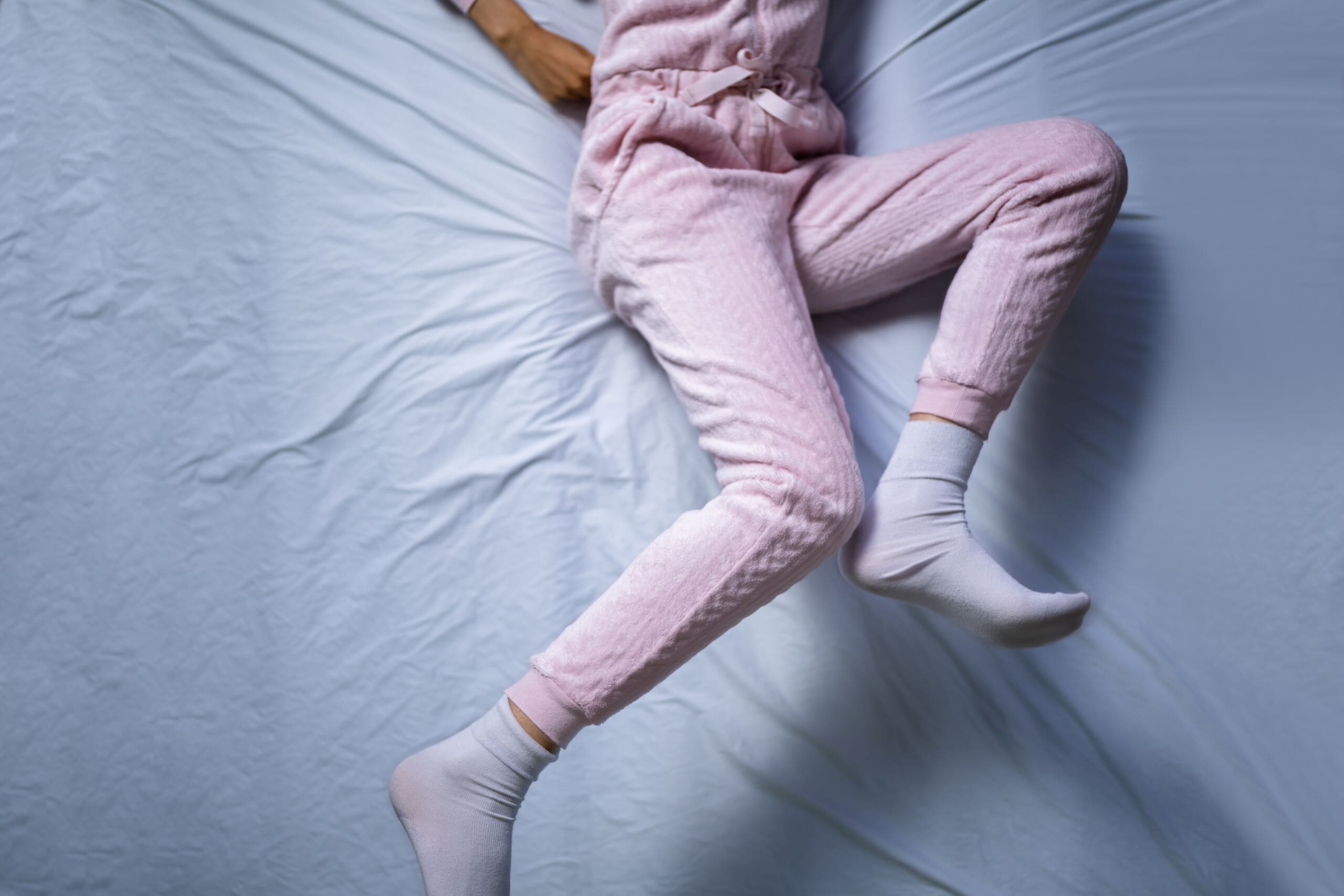
Restless Legs Syndrome (RLS)
For people trying to sleep with RLS, discomfort in their legs and feet often peaks during the evening and nighttime, which can make it very tricky to relax, unwind, and ultimately fall asleep on time.
This is largely because the feeling of discomfort associated with RLS causes them to restlessly move their legs, which temporarily relieves the discomfort. However, this constant need to move can delay sleep. And even when sleep does come, sufferers may still move in the night, with excessive movements being more likely to wake them up.
Night Terrors and Sleepwalking
More commonly seen in children, but experienced by people of all ages, both night terrors and sleepwalking occur when your body enters non-REM sleep, but the area of the brain that controls movement is still active.
Partially awake, sufferers may find themselves acting out parts of their dream, thrashing around in bed, and waking up in cold sweats, especially if their waking dreams are particularly scary to them.
Naturally, those who have night terrors or sleepwalk may struggle to get back to sleep after an episode, causing them to miss out on essential sleep cycles and leaving them more exhausted than usual.
What causes sleep disorders?
As with any form of illness or disorder, uncovering what causes sleep disorders in different people is the first step towards treating them. Unfortunately, doing this is easier said than done, as their root cause can vary on a case-by-case basis.
However, many of the common types of sleep disorders are often linked to heightened emotional states that trigger our fight or flight response, such as stress, anxiety, and even excitement. Strong feelings of a certain emotion can cause our brains to go into overdrive, interrupting our sleep patterns and leaving us tossing and turning in bed.
Dr Lee sheds further light on this, stating:
"Stress activates the hypothalamo-pituitary axis, stimulating the sympathetic nervous system and triggering our bodies to enter a state of ‘fight, fright, or flight’ which is exactly the opposite of what is needed to create sleep. As for what causes such a state, there could be be many factors at play, such as financial worries, academic pressure, social isolation, and the stress of social media. Studies show that the UK workforce is currently experiencing very high levels of stress thanks to excessive workloads, time pressures, pay issues, an inability to take annual leave, poor work/life balance, and general burnout. However, screentime is also playing a larger role than you might think. Findings suggest that adults spend an average of 7 hours a day looking at screens, while children spend an average of 5-6 hours a day. These electronic screens emit blue light, which prevents the release of the sleep hormone, melatonin, and the emotional arousal from using these devices prevents the mental wind-down needed for sleep. Finally, the ongoing economic crisis we’re seeing, as well as unfamiliar world events like the wars in Ukraine and Gaza, are contributing to rising anxiety levels, which can affect the ability to sleep."
Of course, heightened emotional states aren’t the only aspect that can delay the onset of sleep, and there are a number of other external factors that could be behind a sleep disorder, such as:
- Medical conditions, like asthma, heart disease, or nerve pain.
- Genetic factors.
- Medication side-effects.
- Working night shifts.
- Drinking caffeine or alcohol before bed.
- Chemical or mineral imbalances in the brain.
- The quality of your sleeping environment.
And for us here at MattressNextDay, that last point is of particular importance. After all, a poor-quality mattress means you’ll get worse sleep in general, which can then act as a knock-on effect for any other factors that may be keeping you awake at night.
How do sleep disruptions affect our physical and mental health?
As you might expect, constant and consistent disruptions to our sleep schedules can absolutely have an impact on both our physical and mental health, and Dr Lee sums up the consequences of not getting enough quality sleep quite simply:
“Getting enough good-quality sleep is essential to maintain physical and mental health. In terms of physical symptoms, sleep deprivation causes daytime sleepiness, fatigue, irritability, difficulty with decision-making, slow reaction times, and headaches.
“However, if unchecked, it can progress to tremors, slurred speech, uncontrolled eye movements, microsleeps, and reckless behaviour. Humans need sleep to survive. And in rare cases, sleep deprivation can actually be fatal.
Are sleep disorders becoming more common in the UK?
Now that we’ve touched on what sleep disorders are and their causes, let’s look a little deeper into the state of sleep disorders in the UK. And whilst we’d love to start off by sharing some data proving that all this talk around growing sleep disorders is a myth, the simple truth is that, yes, sleep disorders are absolutely on the rise in the UK – and they’ve increased a lot!
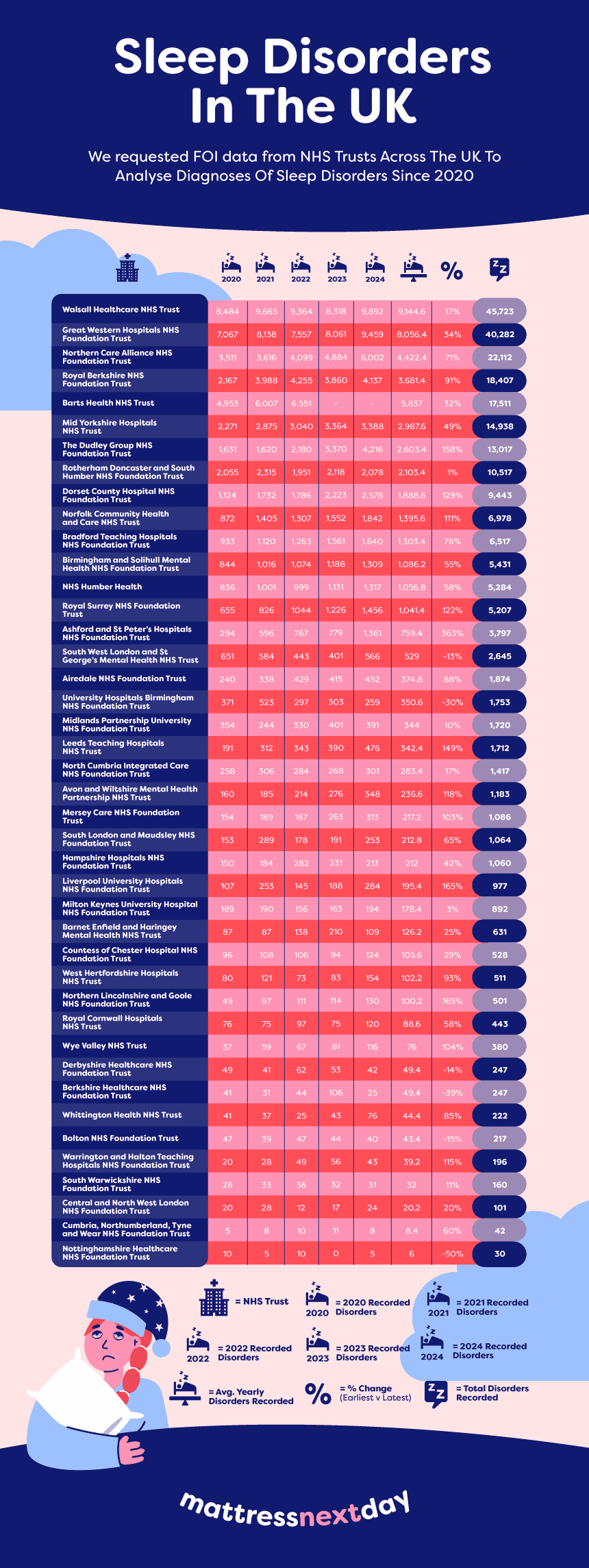
Stats released to us by the NHS claim that sleep disorder diagnoses have grown by a full 35% in the last 5 years, sitting at a grand total of 247,003 at the time of writing. And these are just the ones the NHS are aware of.
To put that into context, the UK has seen an average of 49,401 sleep disorders being diagnosed per year, from 2020 onwards. However, the number of recorded cases has absolutely risen consistently on a yearly basis, with 55,772 cases being reported in 2024 compared to only 41,381 in 2020.
And it seems that Dr Lee’s own research backs this trend:
"During the 2020 COVID-19 pandemic, reports began to accumulate about an increase in the prevalence of sleep disorders, particularly insomnia, obstructive sleep apnoea (OSA), nightmares, and REM sleep disorders, many of which were underpinned by factors such as stress, anxiety, distress, and post-traumatic stress disorder (PTSD). However, since then, this rising trend in insomnia and OSA has persisted around the world. A 2025 review of insomnia in 31 countries concluded that 16.2% of people were experiencing some form of this disorder, with 7.9% suffering from it more severely than others."
In other words, more people are suffering from sleep disorders now than during the height of the pandemic, suggesting that it’s not just simple stress that’s keeping UK citizens up at night.
Where in the UK are sleep disorders most common?
Breaking down our data on a more granular level, we can gain greater insights into just where in the UK has seen the largest increase in recorded sleep disorders. And, according to the information we were allowed to access, this would appear to be Swindon and its surrounding area.
Clocking in at an average of 9,144.6 cases per year, doctors at the Walsall Healthcare NHS Trust noted that this was an increase of around 16.6% since 2020.
But the Walsall Healthcare NHS Trust is definitely not the only hospital to see a steady increase in sleep disorder rates.
Great Western Hospitals NHS Foundation Trust saw an average of 8,056.4 sleep disorder diagnoses over the last 5 years (which equated to a 33.8% increase), while the York and Scarborough Teaching Hospitals NHS Foundation Trust in Scarborough reported roughly 5,414.3.
Add to this the statistics from the Northern Care Alliance NHS Foundation Trust in Salford (4,422.4 reported cases and a 70.9% increase) and the Royal Berkshire NHS Foundation Trust in Reading (3,681.4 sleep disorder diagnoses, which equates to a 90.9% rise), and it’s clear that the growth of such sleep disorder cases is not limited to one area of the country.
Which area of the UK has seen the highest increase in sleep disorders?
Although sleep disorder rates appear to be increasing across the nation, certain areas of the UK have seen a substantially higher increase in sleep disorders than others.
Case and point, Ashford and St Peter’s Hospitals NHS Foundation Trust in London has seen a whopping 362.9% increase in the number of sleep disorder diagnoses since 2020 – going from a low of 294 in that year to an all-time high of 1,361 in 2024. Liverpool University Hospitals NHS Foundation Trust also saw a large increase of 165.4%.
Meanwhile, on the other side of the country, Northern Lincolnshire and Goole NHS Foundation Trust in Scunthorpe noted their sleep disorder cases had grown by 165.3%, closely followed by a 158.5% rise in cases reported by the Dudley Group NHS Foundation Trust in Dudley.
Finally, Leeds Teaching Hospitals NHS Trust saw an increase of 149.2%, while both the Dorset County Hospital NHS Foundation Trust and the Royal Surrey NHS Foundation Trust saw sleep disorder rates rise by 129.4% and 122.3%, with the Royal Surrey NHS Foundation Trust noting that their cases had increased from 655 during the pandemic to upwards of 1,456 by the end of last year.
In short, it‘s a very similar story from the vast majority of the NHS hospitals that got back to us, with its even spread across the country hinting that this is a nationwide issue, rather than there being a singular ongoing cause in a few local areas.
Are there any regions experiencing fewer sleep disorders?
Interestingly, despite the general trend towards sleep disorder growth across the majority of the country, there are a few locations that appear to have seen a fairly substantial decrease in the number of sleep disorders being recorded.
For example, University Hospitals Birmingham NHS Foundation Trust saw the number of diagnosed sleep disorders in the wider Birmingham areas fall by 30.2% over the last 5 years, while Berkshire Healthcare NHS Foundation Trust and the Nottinghamshire Healthcare NHS Foundation Trust saw their cases fall by 39.0% and 50.0% respectively.
However, while this is certainly good to hear, none of these hospital trusts had a particularly high rate of diagnosed sleep disorder cases to begin with, and they certainly don’t account for the wider potential of sleep disorders going undiagnosed in their local area and throughout the country.
How can you tell if you’re experiencing a sleep disorder?
Based on the results of our survey, there’s certainly a strong case to be made for the rise of sleep disorders in the UK. Which begs the question, ‘How can you tell if you’re suffering from a sleep disorder or if you’ve just had a bad night’s sleep?’.
Well, to start with, and as you’re no doubt tired of hearing, it’s worth pointing out that most sleep doctors recommend getting an average of 7-9 hours of sleep every night. So, as long as your regular sleep pattern sits somewhere within this range (and ignoring the odd late night here and there), you’re likely not suffering from a sleep disorder.
However, if you do find that you’re consistently getting less than 7 hours of sleep per night – or you’re getting enough sleep but still feel tired in the morning – then you might want to keep an eye out for the following sleep disorder symptoms:
- You find it difficult to fall asleep at night, or you lie awake for long periods after getting into bed.
- You regularly feel like you need to move in bed, both while awake and asleep.
- You’re consistently waking up multiple times in the night.
- You regularly wake up early but are unable to get back to sleep.
- You consistently wake up tired or feel like you’ve not slept well when you wake up, despite getting at least 7 hours of sleep.
- You find yourself regularly sleeping more than 7-9 hours per night.
- You consistently feel down or experience lower mood levels on average.
- You consistently experience difficulty concentrating while awake or experience regular bouts of ‘brain fog’.
- You find yourself feeling consistently more irritable than usual.
- You feel incredibly tired during the day and often catch yourself falling asleep in situations where you need to be alert (i.e., while driving or at work).
- You suffer from irregular breathing patterns while asleep (i.e., snoring, gasping, choking, etc.)
- You experience regular bouts of sleepwalking, sleep paralysis, or other unusual sleep activities.
What should you do if you think you have a sleep disorder?
If you think you’re experiencing one or more of the above symptoms on a regular basis, then it could be that you’re suffering from one of the many common sleep disorders diagnosable that we outlined earlier. In which case, you should reach out to your doctor as soon as possible for an official diagnosis rather than trying to sort it out yourself.
As Dr Lee points out:
"Anyone with a sleep disorder needs to first correct their sleep hygiene. If this doesn’t help, the next step is Cognitive Behavioural Therapy (CBT) – a type of talking treatment that can help with anxiety and spiralling thoughts. Relaxation techniques are also likely to help improve sleep. This could be anything from doing gentle exercise before bed, having a hot bath or shower, meditation and mindfulness, writing a journal, or reading for half an hour in bed. Taking regular physical exercise every day helps sleep, too, but this should not be done too close to bedtime. In general, medication is not recommended for sleep disorders due to their addictive properties and the issue of side effects, and you should absolutely speak to your doctor before using any."
Should we be concerned about this rising sleep trend?
While the data from our study certainly indicates a continual rising trend in sleep disorders, it’s unclear whether or not such issues will persist in the future. So, to gain more insight into the potential for UK sleep disorder rates to increase further, we asked Dr Lee for her take on it:
“Unfortunately, I do see this trend continuing to increase. It’s hard to believe that the current sleep disorder crisis will disappear any time soon. Simply put, the combination of modern-day and lifestyle risk factors is producing a perfect storm for it. I always say that getting enough sleep is an emergency, not an optional extra. We need to raise awareness of this issue and do all we can to assist everyone to get enough good-quality sleep. The rise in sleep disorders is a serious ‘wake-up call’ from the threats of modern life. And if we don’t wake up to the importance of sleep, this could have serious consequences down the line.”
Improving your sleep with MattressNextDay
Sadly, having completed the analysis of our data, our findings do indeed suggest that sleep disorders are on the rise. However, the good news is that being more alert and aware of this phenomenon will also go a long way towards managing and treating sleep disorders in the future.
Of course, one way to help reduce the chances of having a bad night’s sleep or developing a sleeping disorder is to make your bedroom as sleep-friendly as possible – and that means establishing a good bedtime routine, finding the right pillows and bedding, and picking the best mattress for your bed!
Finding the right double mattress or king-sized mattress for your sleeping needs, in particular, is absolutely essential if you want to feel well-rested every morning, so why not get in touch with our mattress team today to find out more about what to look for when buying a new mattress and to take advantage of our free, next-day delivery service.
And don’t forget that you can also head over to the MattressNextDay blog and guide hubs for more insightful sleep articles like this one!