
 Lowest Price Promise
 0% Buy now, pay later

Memory foam mattresses are known for their comfort and pressure relief, but when it comes to cleaning them, they require a very different approach from traditional sprung beds.
Too much water, heat or pressure can damage the foam and make your mattress wear out faster.
If you're wondering how to clean a memory foam mattress safely, here is an easy-to-follow guide along with the most common mistakes people make.
Why memory foam mattresses need special care
Martin Seeley, CEO at MattressNextDay, explains: “Memory foam reacts to heat and pressure, which is why it feels so comfortable to lie on. But that also means you have to be careful when cleaning it.
“The material is more absorbent than people realise. If you soak it, the moisture can sit inside the foam and take a long time to dry out properly. That can affect how it feels and how it performs over time.
“With memory foam, it’s better to treat small areas carefully and make sure everything is completely dry before putting bedding back on. It’s not designed to be saturated.”
To keep it in the best condition, you should clean your memory foam mattress every six months. Don’t worry, this doesn’t necessarily mean a full deep clean, but you can quickly freshen it up by following a few of our tips below.
How to clean a memory foam mattress properly (step-by-step)
As with cleaning any mattress, cleaning a memory foam mattress doesn’t have to be complicated. The key is to use as little moisture and heat as possible, and give the mattress plenty of time to dry.
Here’s how to give your mattress a safe refresh.
1. Check the care label before vacuuming
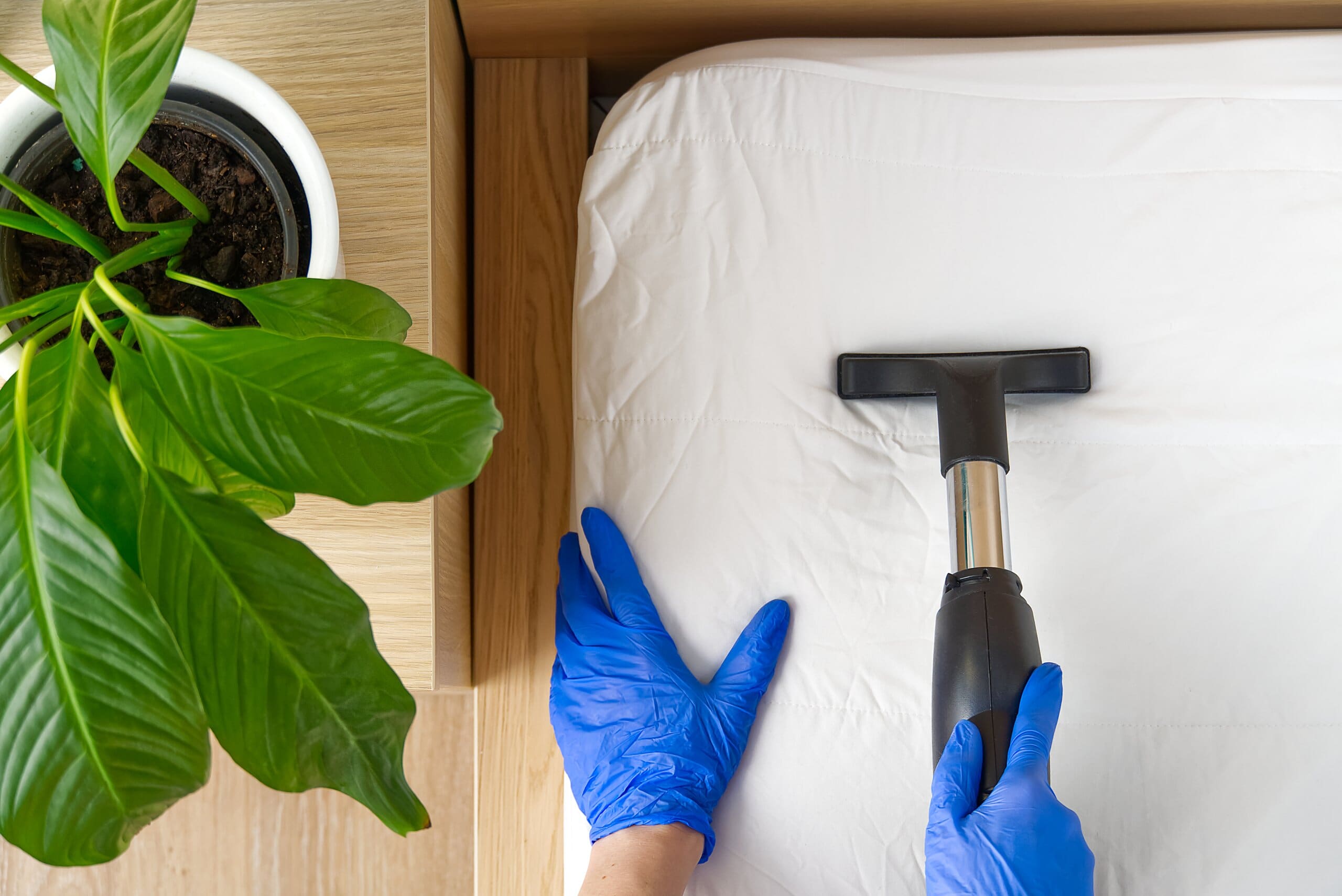
Many people think you should never vacuum a memory foam mattress. In most cases, light vacuuming is fine, but it’s always worth checking the care label first.
If vacuuming is recommended, use a soft upholstery attachment and gentle pressure. Avoid rotating brush bars or pressing down hard, as this can strain the cover or compress the foam underneath.
The aim is to lift surface dust, skin cells and loose debris - not to work deep into the mattress. This helps stop build-up and means you won’t need a deep clean as often.
2. Spot clean with minimal moisture
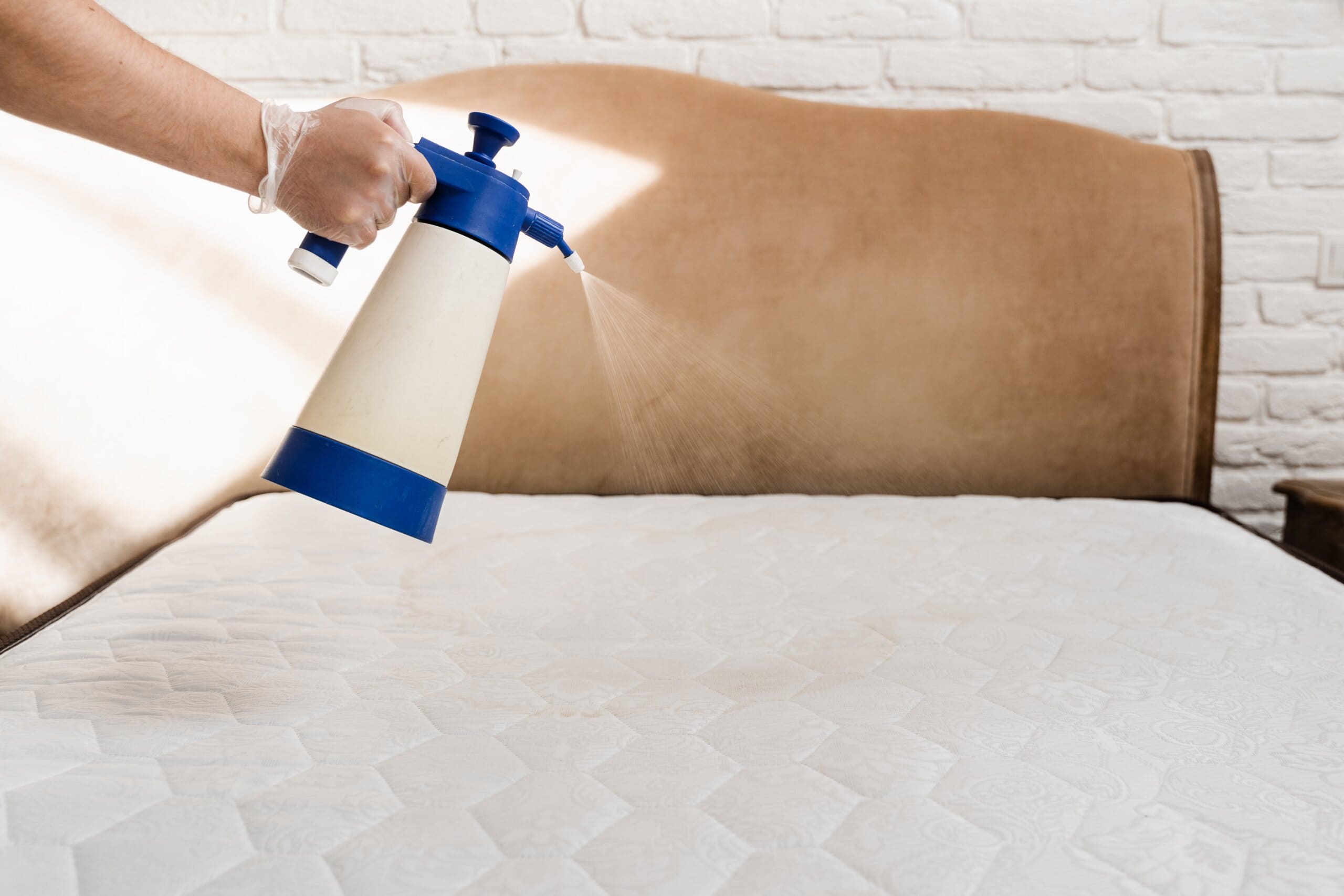
If you’re dealing with a spill or stain, mix a small amount of mild detergent with cold water.
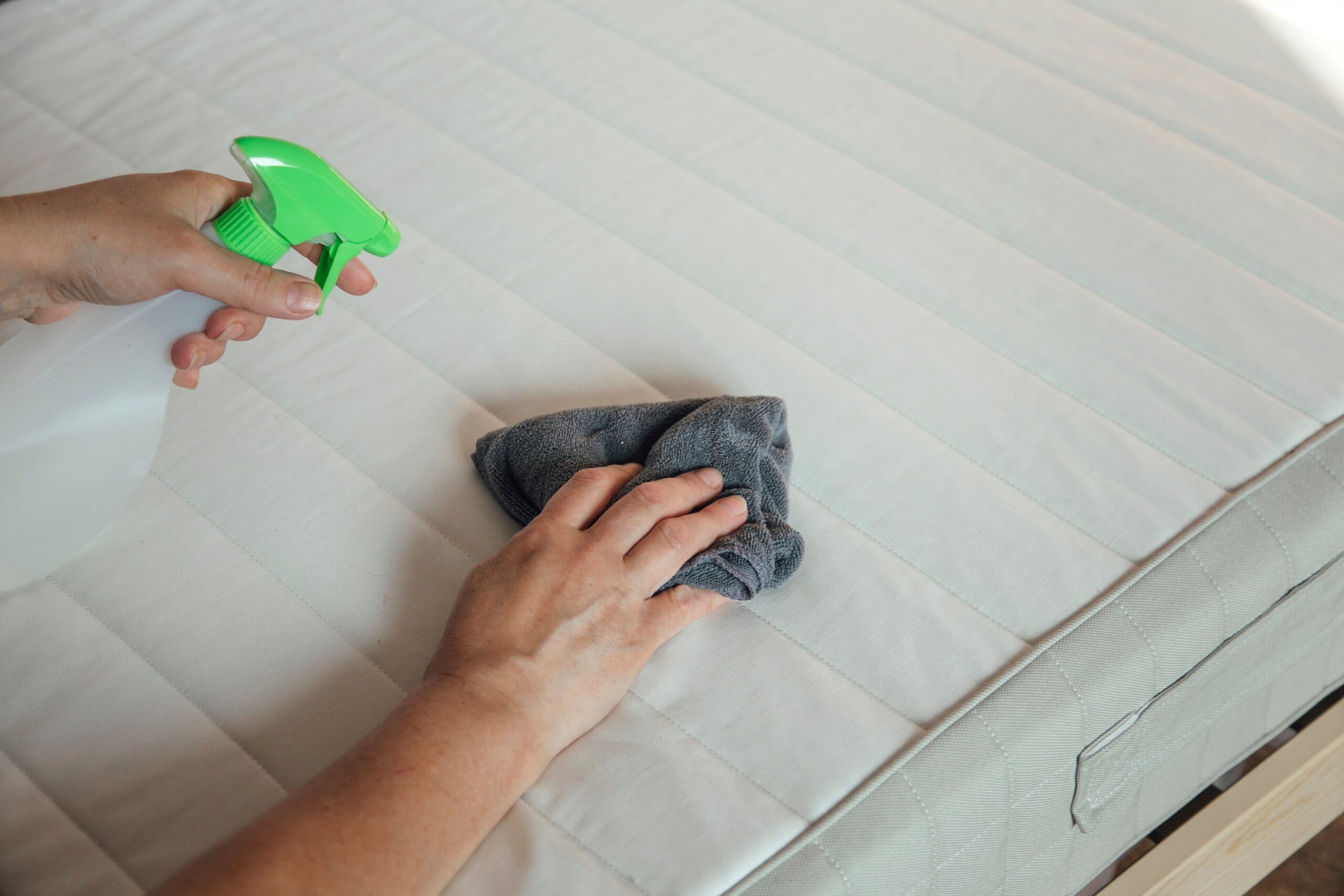
Never pour water straight onto a memory foam mattress. Instead, apply the mild detergent and water onto a white cloth. Blot the area gently, working a bit beyond the visible edge to stop rings from forming as it dries.
Never scrub. The aim is to lift the mark gradually without pushing moisture deeper into the foam.
“If the surface looks wet rather than lightly damp, you have probably used too much liquid. With memory foam, less really is more,” Martin explains.
3. Freshen with a light layer of baking soda
For general odour control, sprinkle a thin, even layer of baking soda across the surface.
Leave it for a few hours so it can absorb moisture and odours. Then vacuum slowly and thoroughly, paying extra attention to seams and edges to make sure no powder is left behind.
4. Allow the mattress to dry fully
Drying is the most important step.
Open windows if you can and improve airflow in the room. A fan or dehumidifier can help. Avoid using high heat to speed things up, and don’t put bedding back on until the mattress is completely dry to the touch.
Memory foam can hold moisture under the surface even when it feels dry on top, so it’s worth giving it extra time.
Martin explains, “Rushing the drying stage is where many issues begin. If there is still moisture inside when bedding goes back on, it has nowhere to escape.”
5. Rotate, don’t flip
Once your mattress is clean and fully dry, rotate it from head to toe if the care label says to.
Most memory foam mattresses are made to be slept on one side only. The comfort layer is on top, with a firmer support base underneath. If you flip it upside down, you’ll be sleeping on the wrong layer, which can make the mattress feel firmer and less comfortable.
It can also affect how the layers wear over time and might even void the warranty.
For more advice on this, take a look at our guide How Often Should I Flip or Turn My Mattress?
The 10 most common memory foam cleaning mistakes
It’s easy to damage a memory foam mattress if you use the wrong method, even if you mean well. Here are the most common mistakes, starting with the ones that cause the most trouble.
1. Soaking the mattress like a sponge
This is the number one mistake people make when cleaning memory foam.
It’s tempting to treat a spill as you would on a carpet or sofa, by using lots of water and cleaner. But with memory foam, that can do more harm than good.
Memory foam soaks up liquid quickly. Once moisture gets below the surface, it can stay trapped for much longer than you might expect. With limited airflow, damp patches can hang around.
In warm, humid conditions, mould can start developing inside a memory foam mattress within 24 to 48 hours if moisture stays trapped in the foam
If that moisture isn’t fully removed, you could end up with musty smells, mould inside the mattress, and foam that wears out faster.
2. Using a steam cleaner
Steam adds the two things memory foam reacts to most: heat and deep moisture.
High heat softens the foam. It might seem fine at first, but over time, repeated heat can stop it from bouncing back properly. That means your mattress won’t support you as well, and your sleep can suffer.
Steam also pushes moisture deeper into the mattress, so it takes longer to dry, and there’s more risk of damp staying trapped inside.
3. Pressing or weighing down wet foam
Placing books, heavy towels or weights on a damp patch might seem like a good idea, but it actually pushes liquid deeper into the foam.
Memory foam compresses under pressure. When it’s wet, that pressure can drive moisture further inside, where it takes much longer to dry. Pressing down on damp foam can also make that area recover unevenly.
If moisture stays trapped, it can affect freshness and make that area wear out faster than the rest of the mattress.
Letting the mattress dry naturally with good airflow is always the safer option.
4. Scrubbing too firmly
It’s natural to want to scrub away a mark quickly. But with memory foam, that can actually make things worse.
Scrubbing pushes liquid further into the foam instead of lifting it out. It can also compress the material underneath, especially if it’s already damp. Over time, pressing in one spot can make that area recover unevenly.
Blotting gently with a clean cloth works better and helps stop moisture from spreading beyond the original stain.
Martin explains, “The aim is always to lift moisture out, not work it deeper into the mattress.”
5. Using a hairdryer on high heat
It’s tempting to speed up drying with a hairdryer, especially if you want to get the bed made quickly.
But memory foam is sensitive to temperature. High heat in one spot can soften the structure unevenly. The surface might feel dry, but the foam underneath can still hold moisture.
Over time, using high heat in one spot can weaken that part of the mattress.
If you need to use a hairdryer, keep it on a cool or low setting and hold it at a distance. Natural airflow will always be the better option.
6. Cleaning your mattress on a cold day
Temperature matters more than most people think.
When it’s cold, the foam gets firmer, and moisture evaporates more slowly. Any liquid from cleaning can take longer to dry than you might expect.
If you place your bedding back on too soon, moisture can remain in the mattress and cause musty odours later.
Whenever you can, clean on a mild day and make sure the room is well ventilated before you remake the bed.
7. Using too much baking soda
Baking soda is often recommended to freshen a mattress, and for good reason. Used lightly, it can help neutralise surface smells.
But problems start when you use thick layers and don’t remove it all. The fine powder can settle into seams and pores. If it’s not removed properly, it can trap odours instead of getting rid of them.
Leftover powder can also make your mattress feel gritty under the cover.
Often, the result is a mattress that smells fresher for a while, but the odours come back because the real problem wasn’t fixed.
8. Cleaning only the visible stain
When you treat a spill, it’s easy to focus just on the darkest or most obvious part of the stain.
But liquid often spreads further than you can see. If you only treat the centre, moisture can stay around the edges and leave a faint ring as it dries.
When cleaning a stain, always work a bit beyond the visible edge and blot evenly. This helps stop the stain from coming back once it’s dry.
9. Spraying fragrance directly onto bare foam
Fragrance might cover up odours for a while, but it doesn’t fix the real cause.
Perfumes and fabric sprays often have alcohol and other chemicals that can react with the foam. They might make the mattress smell stronger at first, but they can trap odours beneath the foam.
Over time, this can leave your mattress smelling mixed or stale instead of fresh.
If odours persist, it’s better to tackle the cause with light cleaning and proper drying rather than just covering them up.
10. Using colourful cloths that can transfer dye
When you’re cleaning a stain, it’s easy to grab any cloth nearby. But bright or heavily dyed cloths can sometimes transfer colour, especially if you’re using vinegar or detergent.
Moisture and cleaning solution can loosen dye in the cloth. When you press it against the mattress, that dye can transfer and leave a new stain that’s even harder to remove.
White or colourfast cloths are always safest for spot cleaning.
How to remove stains from a memory foam mattress
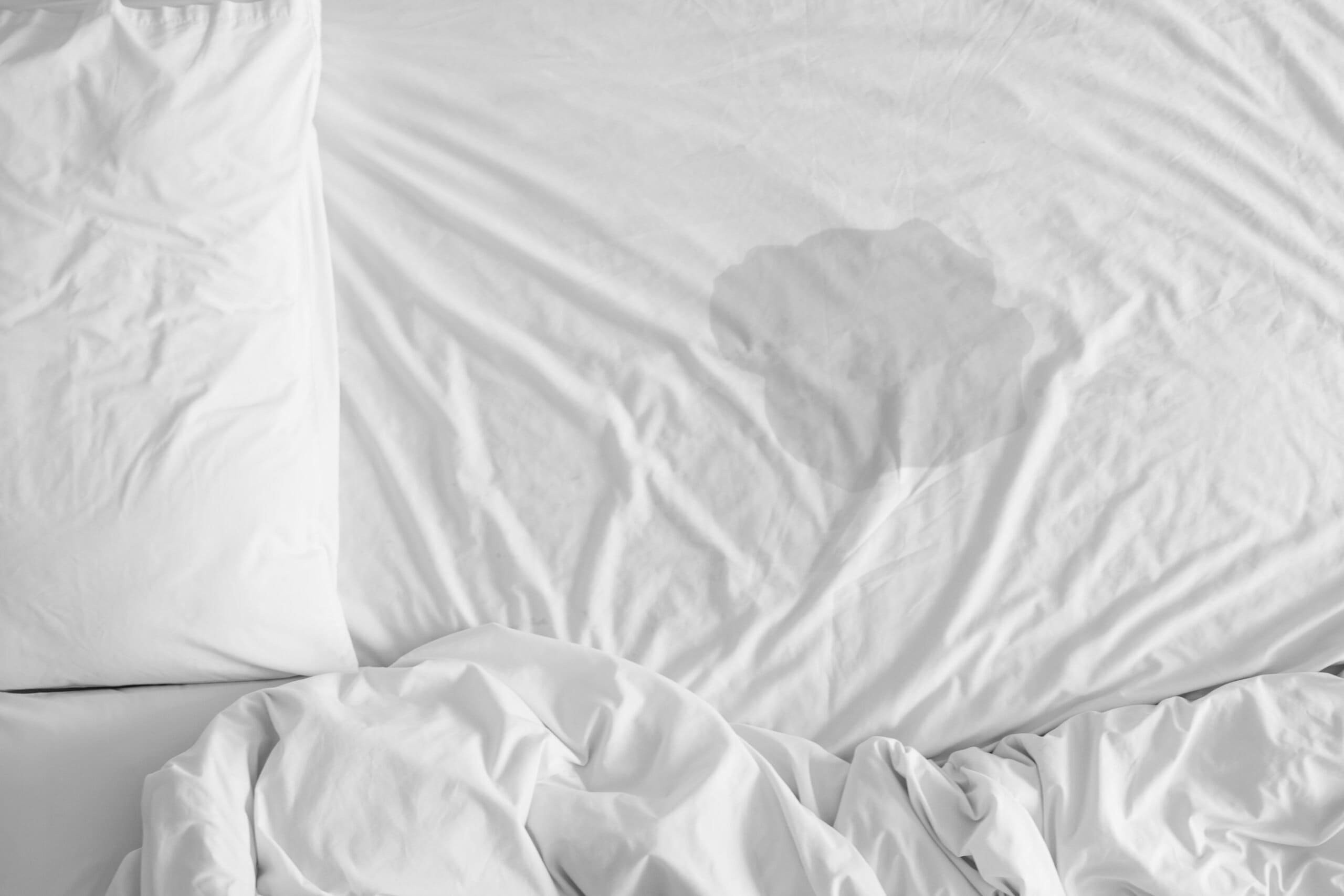
Stains should always be treated as soon as possible. The longer the liquid sits on the memory foam, the greater the chance it has to soak into the foam.
The key is to use as little moisture as possible, avoid heat, and give the area plenty of time to dry before you remake the bed.
Sweat Stains
Sweat can leave faint yellow marks over time, especially in warmer months.
To treat them, mix a small amount of mild detergent with cold water. Lightly dampen a clean, white cloth, then gently blot the affected area. Avoid soaking the mattress or scrubbing firmly.
If needed, repeat the process instead of using more liquid at once.
Once it’s clean, let the mattress dry completely before you put bedding back on.
Blood Stains
Blood should always be treated with cold water, never hot. Heat can set the stain, making it harder to remove.
Gently blot the area with a cloth dampened in cold water. If the mark is still there, try a little mild detergent diluted in cold water.
Work slowly, avoid overwetting the foam, and read our guide to Getting Blood Out of a Mattress if you need more detailed tips
Urine Stains
If you act quickly, urine can usually be removed with a mild detergent solution and careful blotting.
For older stains, a little diluted white vinegar can help neutralise odours. Lightly spray the area instead of soaking it, then blot gently with a clean cloth.
After cleaning, sprinkle a thin layer of baking soda on the surface and leave it for a few hours, then vacuum thoroughly.
Again, drying fully is especially important here. Trapped moisture is what causes lingering smells late. Our guide to Getting Urine Out of a Mattress offers even more tips and advice if you’re still feeling stuck.

Final tips on cleaning your memory foam mattress
You shouldn’t use hydrogen peroxide on your mattress unless the manufacturer's instructions say you can. This chemical can bleach the fabric, so if you do want to use it, make sure to test a small patch first and ventilate the room as best you can.
If your mattress is particularly stained or dirty, we’d recommend investing in a new one to protect your health and comfort. While memory foam is hypoallergenic, bacteria can still build up quickly, and while it may not be visible to the human eye, it can cause serious problems to your health.
For more tips on knowing when it’s time to say goodbye to a dirty mattress, read our guides on How Long a Mattress Lasts, and when you’re ready, our Memory Foam Mattress Buying Guide.